
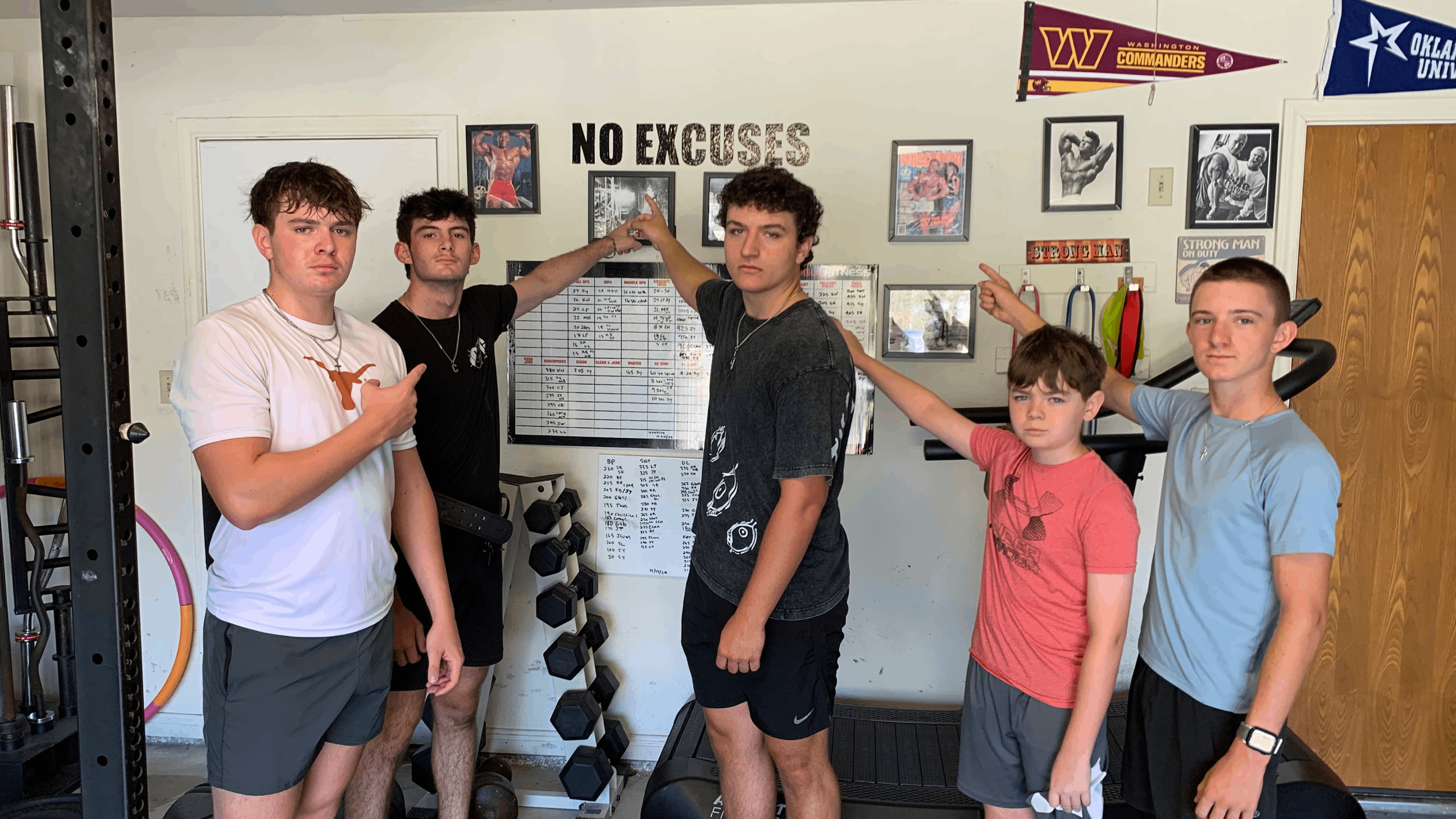
The Garage Gym: Where the Standard Is High
The older I get, the more convinced I become of something I’ve believed for a long time:
Training is therapy.
I’m in my 60s now, and I still want to train like an athlete. I want to hold onto my strength, flexibility, jumping ability, balance and cardiovascular conditioning for as long as I possibly can.
At this stage of my life, CrossFit is probably my favorite type of training. I enjoy being challenged. I enjoy learning. I enjoy discovering weaknesses and working on them.
I don’t believe getting older means we should stop being athletes.
Weight training helps keep you young in the ways that matter. It allows you to keep using your body—to lift, run, jump, balance, work and participate in life rather than gradually surrendering those abilities.
But after decades of training myself and coaching others, I’ve become convinced that some of the greatest benefits of the weight room aren’t physical at all.
They’re about the person you become.
Environment Changes People
I live in a small town.
There are some well-meaning coaches here, but there aren’t enough examples of what it really means to prepare and train hard enough to win at a high level. Football Coaches like Gordon Wood, Ken Purcell, Chris Ross, Todd Dodge – these are the types of coaches that have the experience and the accolades to back it up. They win wherever they go. They change lives wherever they go. They actually know the names of the students and the athletes in the school. They make an effort, they have high Emotional Intelligence.
It’s disappointing because young athletes need to see the standard before they can fully understand it.
I’ve intentionally surrounded myself with world champions, state champions and high-level athletes. I watch them. I listen to them. I ask questions. I learn from them.
Then I try to bring that culture into my garage gym.
I’ve been asked by many parents over the years why I don’t become an athletic director and establish this kind of culture throughout an entire high school athletic program.

At this point in my life, I’m extremely happy exactly where I am. I’m right where I want to be. I’ve experienced the corporate world first hand working my way up from a buyer, to a supervisor, to a manager and on the career track to be an executive at the highest level. The experience that I received managing over 125 employees, managing 5 supervisors, working closely with HR, representing the company through union employee negotiations, managing a multimillion dollar budget and running a 100,000 sq foot distribution center in Atlanta more than prepared me for whatever life threw at me on the business side of things. In fact, most coaches and athletic directors never experience the business/corporate world which is unfortunate. It certainly creates a more well rounded, experienced individual.
But I am watching. Because time always tells. Always.

Keegan Nichols, Football State Champions, Cedar Park 2015
I’m still training. I’m still getting better at CrossFit. I watch high school and college programs closely. And I have my garage gym.
What we’re doing here is working.
I’ve watched athletes achieve at a high level in sports and then go on to achieve at a high level in college, graduate school, careers and life.
That means more to me than building a bigger squat.
Why Do the Same Programs Keep Winning?
Look at successful athletic programs over long periods of time.
Certain programs keep winning at a high level. Not beating mediocre teams but WINNING STATE CHAMPIONSHIPS.
Why?
Culture.
Great coaches understand more than X’s and O’s, sets and reps.
They understand people.
They understand accountability and emotional intelligence. They know when an athlete needs encouragement and when he needs to be challenged. They establish expectations and create an environment where serious preparation becomes normal.
There’s also a lot of ego among coaches—sport coaches and strength coaches alike. Most mean well. But ego can prevent coaches from continuing to learn or admitting that someone else might know something they don’t.
I’ve always tried to do the opposite.
Find successful people.
Learn from them.
Bring what works home.
That’s what I’m trying to create on a much smaller scale in my garage.
I sometimes describe Scott York Fitness as a professional strength program at the high school level.
And I’ll admit something:
It’s too much for a lot of kids.
Does the Athlete Really Want It?
If a 15-year-old tells me, “I want to be great,” I’m not particularly interested in the statement.
I’ll watch what he does.
Does the athlete want to be great—or do his parents want him to be great?
Does he want to accomplish something—or does he want to look successful on social media?
Those are very different things.
The athletes who genuinely want to achieve at a high level start caring about things other kids consider boring.
Sleep.
Nutrition.
Mindset.
Goal setting.
Recovery.
Technique.
Consistency.
Showing up again next week after this week’s workout was brutal.
I can often tell within a week—and sometimes within a day—how serious an athlete really is.
You see it in energy.
Body language.
Attention to detail.
How they respond to coaching.
How they react when something gets difficult.
You can also recognize fake confidence pretty quickly. There’s a difference between confidence earned through preparation and an ego that hasn’t been tested against good competition.
But ultimately, I don’t have to decide.
Time always tells.
Eventually you add up the accomplishments. You look at what happened against good competition and at higher levels.
The people who only wanted to look serious usually disappear.
My son has become laser focused on goals in and out of sport. He has learned the fine art of taking time to celebrate victories as well as recalibration when necessary. I am truly thankful for Scott’s influence in my son’s life. He is learning skills that will help him be successful in life.”
– R.N./Cedar Park, Texas
I Learned This Lesson Myself
Back in the 1990s, I wanted to become Mr. Texas in bodybuilding.
At the time, my motorcycle was my only transportation.
I would ride across Dallas—from North Dallas into Central Dallas—to train legs with Kelly Hitchcock.
Sometimes it was raining.
I went anyway.
Kelly had been Mr. USA and Mr. Texas. He was extremely intelligent, and I had never been around anyone who trained harder. Those leg workouts were on another level.
There were times I dreaded them.
But I kept getting on that motorcycle and going back.
Week after week.
Month after month.
And something happened.
My body changed.
More importantly, my mindset changed.
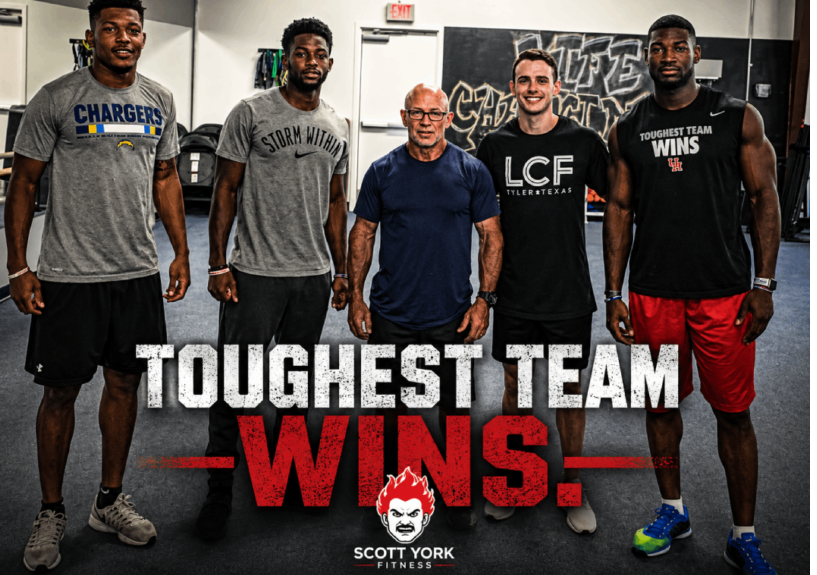
I had put myself into an environment where the standard was higher than the one I had previously known.
That’s difficult to explain to somebody who hasn’t experienced it.
I was willing to make that sacrifice because I wanted something badly enough.
And I’d do it again.
That’s one of the things young athletes need to understand:
Being great is a whole different level.
Most people simply aren’t willing to undertake what it requires.
And that’s okay.
But don’t confuse wanting the appearance of success with wanting what success actually requires.
First We Build the Foundation
When an athlete enters my gym, however, I’m not interested in destroying him with a workout.
That’s not coaching.
First comes safety.
Then correct technique.
Then strength.
Then confidence.
Only after those things have been developed do we begin deliberately pushing the athlete beyond places he or she has previously been.
Safely.
Intelligently.
Progressively.
That’s where physical training starts becoming something more.
You’re tired.
Keep going.
Something is difficult.
Figure it out.
You failed.
Come back.
You’re not as strong as you thought.
Get stronger.
Nobody is applauding you today.
Train anyway.
That’s life.
There’s a reason physical training has long been part of military preparation. Physical hardship can teach people to remain disciplined and functional when they’re uncomfortable.
Athletes can learn something similar.
I call it going into deep water.
Anybody can look good when the work is easy.
I want to see what happens when it isn’t.
Parents Are Part of the Process
One characteristic I’ve noticed among many of my successful athletes is that their parents supported what we were doing and trusted me to coach.
Parents should absolutely ask questions and make sure their children are being coached safely and intelligently.
But young people also need opportunities to struggle.
To fail.
To solve problems.
To discover that they’re capable of overcoming difficult things without somebody immediately removing the difficulty for them.
I’ve seen the opposite, too—parents becoming so involved in every detail that the athlete never really gets ownership of the process.
Eventually, the athlete has to want it.
Nobody else can want it for them.
That’s another reason our environment matters.
We talk about life in my gym.
College athletes come back and share their experiences with younger athletes.
Older athletes help younger ones.
We talk about mistakes, goals, consistency, focus, responsibility, toughness and not giving up.
Those conversations might happen between sets of squats.
But they’re every bit as important as the squats.
Back to the Garage
There’s something interesting about strength training.
You don’t necessarily need a multimillion-dollar facility to create an extraordinary environment.
A lot of highly accomplished strength coaches eventually find their way back to where so much of this started:
The garage.
A rack.
A barbell.
Weights.
A few athletes.
A knowledgeable coach.
And a standard.
There aren’t many places to hide in my garage.
Nobody cares what you’re wearing.
Nobody cares how impressive your workout looks on Instagram.
Can you do the work?
That’s the question.
What I Hope They Remember
Eventually every high school athlete plays his or her last game.
The uniform gets put away.
The crowd disappears.
The statistics stop accumulating.
And life gets much bigger.
That’s when I hope some of what we did together begins to make sense.
I’ve had former athletes tell me:
“I wish I had started training with you earlier.”
“Thank you for teaching me.”
“Thank you for leading by example.”
“You showed me what real intensity was.”
“You taught me how to set goals.”
“You showed me what achieving at a high level actually looks like.”
Hearing those things gives me tremendous satisfaction.
Because ultimately, my goal isn’t to produce great weightlifters.
It’s to use strength training to help develop stronger people.
People who understand preparation.
Focus.
Consistency.
Goal setting.
Challenge.
Failure.
Overcoming.
And what it feels like to pursue something at a genuinely high level.
You don’t have to train in my garage.
You don’t have to train with me.
But if you’re serious about becoming something more than average, I believe you need to find an environment where the expectation is high, the intensity is high and the will to win is high.
Find people who have already been where you want to go.
Surround yourself with them.
Learn from them.
Then do the work.
The environment matters.
The standard matters.
And eventually, your actions tell everybody how badly you really wanted it.
— Scott York
Scott York Fitness